
Modern Etiquette Tips for Writing to Your Elected Officials
This post contains affiliate links and ads. Affiliate links and ads support my work at no extra cost to you. Thank you for your ongoing support!Etiquette enables you to resolve conflict without just trading insults. Without etiquette, the irritations in modern life are so abrasive that you see people turning to the law to regulate everyday behavior. This frightens me; it's a major inroad on our basic freedoms.
Judith Martin
At times, modern etiquette can be dismissed for being focused on seemingly trivial details such as which fork to pick up at the table or the art of folding a linen napkin. Opinions may abound on such things, but in truth, modern etiquette gives us the tools to conduct ourselves with integrity and respect for self and others.
While there are rumors that a civil society no longer exists, I believe that in times such as these, manners are more important than ever. If we cannot respect others as we wish to be respected, if we cannot communicate our ideas without hearing the ideas of others, if we cannot trust the integrity and character of those in leadership, how can we move forward and expect to make modern society truly great for everyone?
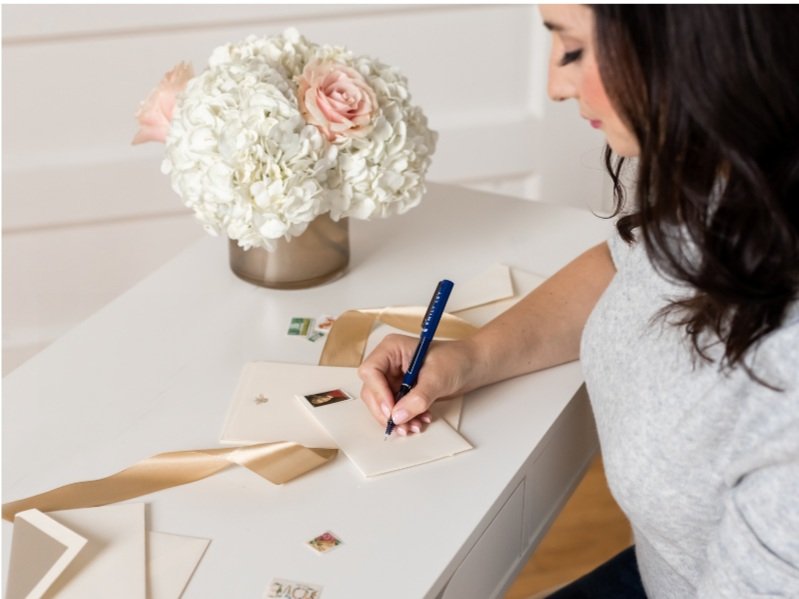
I’ve seen countless articles about how letter writing is back in vogue, which thrills me to pieces. If you think you might want to sharpen your own letter writing skills but fear having no one to write to, I’m happy to tell you that you have built in penpals who would love to hear from you.
Consider writing to your local and state representatives. A handwritten letter is a wonderful way to introduce yourself and share your ideas or concerns for the problems you face, or to simply encourage your representatives to continue doing a great job in their role. Email will certainly reach the intended recipient more quickly and is best for urgent issues. In either case, there is a certain etiquette for addressing envelopes and proper salutations and sign-offs to use depending on who you are writing to.
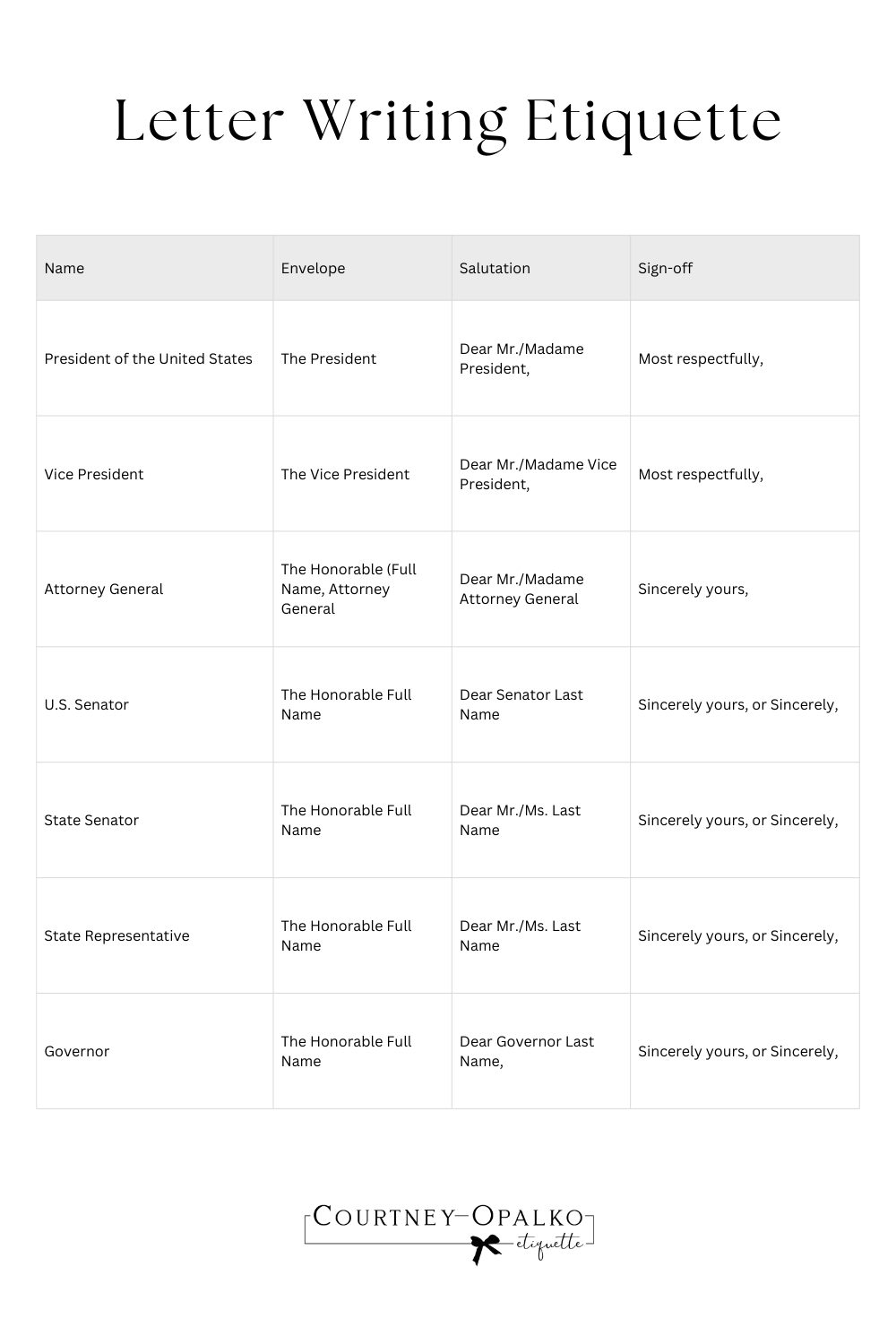
It is important to remember that courtesy titles and honorifics are not salutations, which is why Mr./Ms./Madame Last Name is often used for most positions.
As for the letter itself, writing from the heart is best. Of course, there are many templates out there, many provided by advocacy organizations. However, when possible, share examples of how the topic at hand appeals to you or affects you and your community. It’s also important to share a call to action. What are you asking the recipient to do? Vote a certain way on an issue? Bring forward a solution to a problem? Fund a program? Be specific in your ask and follow up on the resolution.
Keep your letter kind, clear and concise. Remember to introduce yourself, share a personal anecdote and a clear call to action. If possible, connect your concerns to an active bill or measure being voted on in the near future.
Not sure where to begin? You can find your representatives here and a list of upcoming bills to be considered on the House floor can be found here. There are many more resources available, so please consider taking a few minutes to find the government websites for your local area and state as well.
Hot topics and urgent issues often prevail in the 24/7 news cycle and while these are great reminders to write to your representative, it’s important to remember that you can write about smaller issues, too.
Elected officials exist to serve their constituents and represent the views and values of their constituents at the local, state and national level. It’s a two way street which requires active participation and in today’s world, sitting out isn’t an option.
The biggest faux pas in modern letter writing etiquette?
Forgetting that you have a voice that is meant to be heard.
Questions about letter writing etiquette? Leave your questions below! Who will you be writing to today?